16èmes journées AFADL
Approches Formelles dans l'Assistance au Développement de Logiciels
Dans le cadre des journées du GDR GPL du 13 au 16 Juin 2017, Montpellier
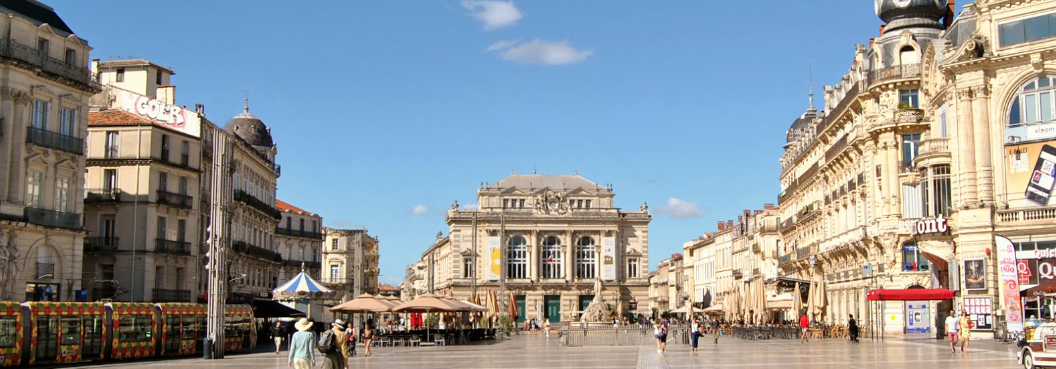
Dans le cadre des journées du GDR GPL du 13 au 16 Juin 2017, Montpellier
| Mercredi 14 Juin | |
| 8h - 9h | Accueil |
| 9h-10h30 | Conférence invitée Gérard Berry, Collège de France |
| 11h-12h30 |
Akram Idani et Nikolai Kosmatov, Ouverture des journées AFADL Session 1 : MTV2 / AFADL
|
| 12h30-14h | Pause déjeuner |
| 14h-15h30 |
Session 2 : LTP / AFADL
|
15h30-16h | Réunion du CP AFADL + Pause |
16h-17h30 | AG du GDR |
| Jeudi 15 Juin | |
| 8h - 9h | Accueil |
| 9h-10h30 | Conférence invitée Jordi Cabot, Open University of Catalonia, Espagne |
| 11h-12h30 |
Session 3 : MFDL, IE / AFADL
|
| 12h30-14h | Pause déjeuner |
| 14h - 16h |
Session 4 : AFADL
|
16h-16h30 | Pause |
| 16h30 - 18h30 |
Session 5 : AFADL
|
L'atelier AFADL rassemble de nombreux acteurs académiques et industriels intéressés par la mise en œuvre des techniques formelles aux divers stades du développement des logiciels et/ou des systèmes. Il a pour objectif de mettre en valeur les travaux récents effectués autour de thèmes comme :
Les techniques et outils présentés assistent notamment les activités suivantes :
On s'intéressera aussi à la combinaison d'approches formelles avec des approches informelles ou semi-formelles, à la coopération de techniques formelles de développement avec des techniques plus classiques (par exemple à la complémentarité vérification formelle / test pour les aspects V&V).
Cette année, AFADL et les groupes de travail Méthodes de Test pour la Vérification et la Validation (MTV2) et Méthodes Formelles pour le Développement Logiciel (MFDL) envisagent d'organiser des sessions communes dans le cadre des journées du GDR.
Cinq types de contributions sont attendus :
Les contributions sont à soumettre via easychair : https://easychair.org/conferences/?conf=afadl2017
Le format des documents doit être analogue au format latex A4, times, french, 11pt, sans numéros de pages :
\documentclass[a4paper, french, 11pt]{article}
\usepackage{times}
\pagestyle{empty}
| Soumission contribution (2 à 6 pages) : | |
| Notification aux auteurs : | |
| Soumission version finale : | 28/04/2017 |
| Déroulement des journées : | Du 13 au 16 Juin 1017 |